

May is Mental Health Awareness Month. For us, it’s a moment to pause and reflect on how healthcare architecture can better support mental and behavioral health.
This month we shared a few behavioral health and mental health projects from our portfolio, along with key lessons learned. How to design for patient safety without creating institutional environments. How space planning, daylight, and material choices can support dignity, recovery, and staff well being.
This is ongoing work. Each project helps us refine how design can improve care outcomes and the experience of both patients and care teams. A few examples are highlighted below.
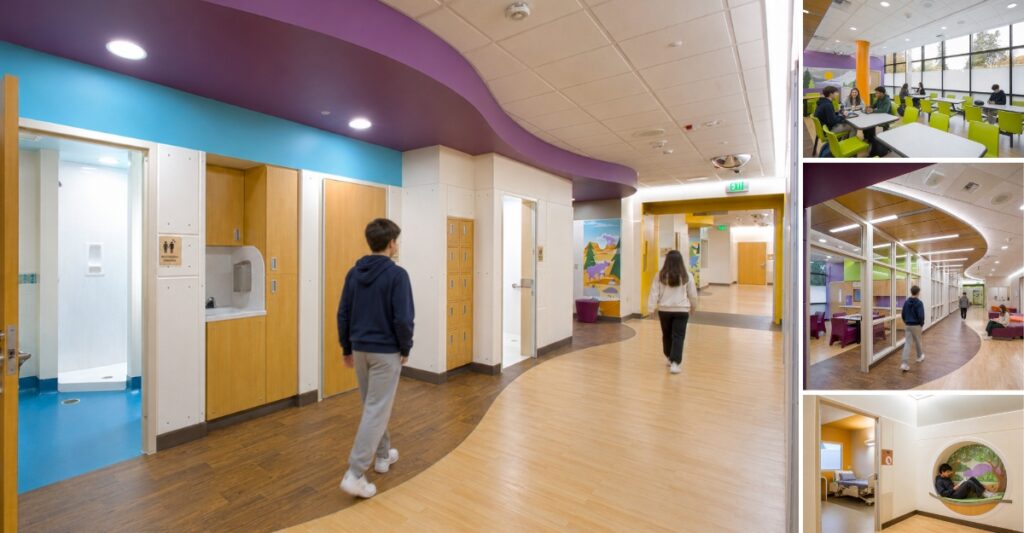
Nearly 1 in 5 youth ages 12 to 17 experienced at least one major depressive episode in the past year, according to a federal survey. That reality makes adolescent behavioral health spaces more important than ever.
This 27-bed inpatient behavioral health unit was designed for teens ages 13 to 18 experiencing acute mental health crisis. Every design decision was shaped by the balance between safety, dignity, and recovery.
In adolescent behavioral health settings, safety cannot feel punitive or institutional. The challenge was creating an environment that meets rigorous clinical and ligature-resistance requirements while still feeling calm, supportive, and human.
Daylight, soft forms, color, and open space became essential design tools. Murals and natural light help soften common areas. Materials and detailing reduce institutional cues without compromising performance. The result is an environment designed to support healing while respecting the experiences of the adolescents receiving care.
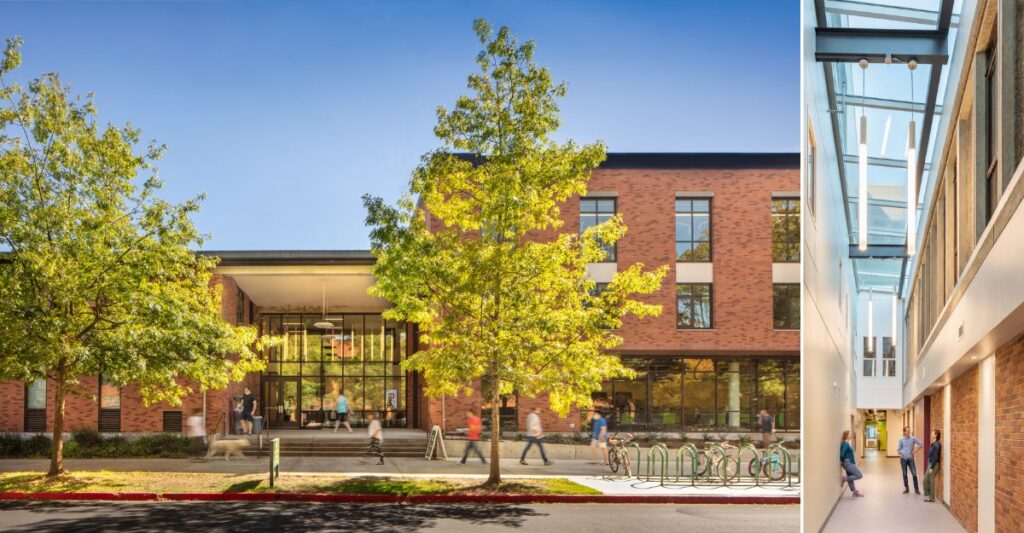
Nearly 40% of college students report moderate to severe depression. Demand for campus counseling keeps climbing. The spaces students move through every day are part of the response.
The University of Oregon Student Health and Counseling Center was designed with that in mind. The goal wasn’t a clinical environment. It was something approachable, calming, and connected to how students actually experience their well-being.
Mental health support starts long before a counseling appointment. Design plays a role too.
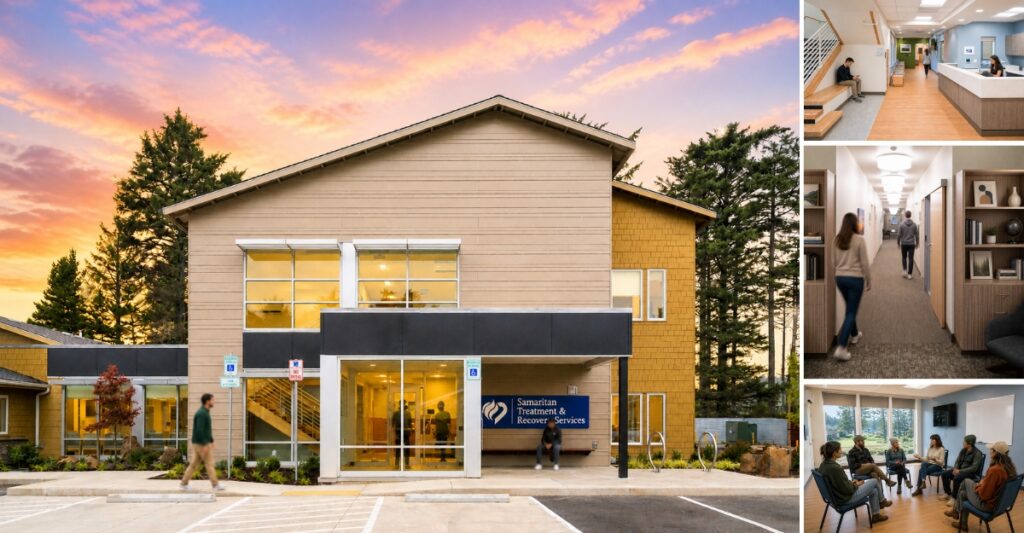
Mental health and recovery spaces work best when people feel safe, supported, and treated with dignity.
We kept that in mind while designing Lincoln County’s new 16-bed recovery facility in Newport, Oregon. The project helps address Oregon’s ongoing gap in substance use treatment access, especially in rural communities.
The facility includes residential treatment, counseling and therapy spaces, peer support, medical care, exercise areas, and shared gathering spaces designed to support connection and recovery. Daylight, nature, outdoor spaces, and quiet reflection areas were also integrated to support a trauma informed approach to care.
As Mental Health Awareness Month comes to a close, projects like this are a reminder that thoughtful behavioral health design can play an important role in supporting healing, recovery, and dignity in care.